
The Open Secret
How Israel’s Nuclear Arsenal Escapes Scrutiny While the World Looks Away

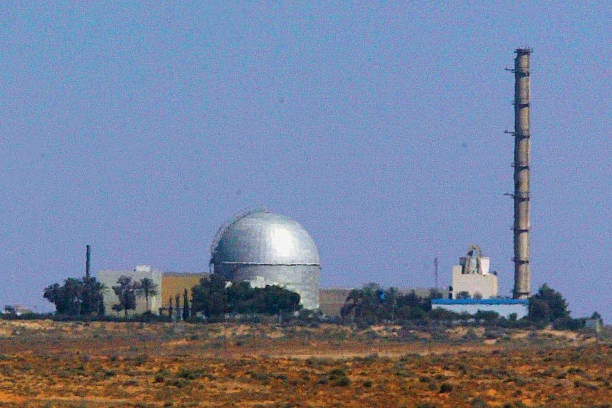
In the annals of nuclear hypocrisy, no case is more significant than Israel’s. For over half a century, Israel has maintained what scholars call a policy of “deliberate ambiguity”—refusing to confirm or deny possession of nuclear weapons while operating outside the global non-proliferation framework that governs nearly every other nation on Earth. This is not merely a legal anomaly; it is a structural failure of the international order, one that reveals how power, not principle, determines who gets to wield the world’s most destructive weapons.
Israel’s nuclear program began in earnest in the late 1950s, with French assistance in constructing the Dimona nuclear complex in the Negev Desert. By the mid-1960s, the facility was reportedly producing weapons-grade plutonium, and by the time of the 1967 Six-Day War, Israel may have already possessed operational nuclear devices. Yet unlike every other nuclear power, Israel has never conducted an official test on its own soil—at least, not one it has ever acknowledged.
The Vela Incident: A Test That Never Officially Happened
The most compelling evidence of Israel’s nuclear testing came not from the deserts of the Negev, but from the cold waters of the southern Indian Ocean in September 1979. On the night of September 22, the American Vela 6911 satellite—designed specifically to detect nuclear explosions—picked up a distinctive “double flash” signal, the telltale signature of a nuclear detonation, roughly halfway between South Africa and Antarctica.
The implications were staggering. President Jimmy Carter, himself trained in nuclear physics, wrote in his diary that the signal could indicate “an Israeli test, a South African test, or neither”. The CIA believed Israel already possessed around 20 nuclear weapons by 1974. Yet rather than pursue a definitive conclusion, the Carter administration assembled a review panel deliberately excluding intelligence officials, which ultimately declared itself uncertain, suggesting the signal might have been a “zoo event,” an atmospheric anomaly rather than a nuclear explosion.
This bureaucratic sleight of hand allowed Washington to avoid confronting an uncomfortable truth. As scholar Avner Cohen has noted, “Now, 40 years later, there is a scientific and historical consensus that it was a nuclear test and that it had to be Israeli”. The Vela satellite that detected the flash had previously identified dozens of nuclear tests with 100% accuracy. The test location was chosen precisely because it was “literally in the middle of nowhere,” and the satellite detecting it was believed to be out of commission—an assumption that proved fatally wrong for those seeking secrecy.
The circumstantial evidence of Israeli-South African collaboration is overwhelming. Both nations were pariah states of a sort—Israel isolated by regional hostility, South Africa by apartheid. A Soviet spy within the South African navy claimed to have witnessed joint naval exercises preceding the test, and the two countries had established a covert uranium-for-technology arrangement. South Africa, which later voluntarily dismantled its own nuclear program, was found to possess only large, primitive bombs—nothing like the compact, “clean” device the Vela signal suggested. The sophistication of the tested weapon pointed toward Israeli involvement.
Yet no country was ever officially blamed. The incident was buried in bureaucratic equivocation, a deliberate non-finding that preserved the fiction of Israeli nuclear innocence.
The Nixon-Meir Understanding: A Deal Written in Shadows
The Vela cover-up was merely the most dramatic expression of a broader pattern of American protection that dates back to 1969. That year, President Richard Nixon and Israeli Prime Minister Golda Meir reached what has become known as the “nuclear understanding” . In the words of then-National Security Adviser Henry Kissinger, “While we might ideally like to halt actual Israeli possession, what we really want at a minimum may be just to keep Israeli possession from becoming an established international fact” .
This was not non-proliferation; it was managed ambiguity. The United States would not ask questions, provided Israel maintained silence and avoided testing its weapons. It took until 2006 for documents exposing this agreement to be declassified, by which time Israel’s nuclear status had long been an open secret. Even then, when asked in 2009 whether any Middle Eastern country possessed nuclear weapons, President Barack Obama—who surely knew better—refused to speculate.
This policy of protective opacity has had real consequences. When Mordechai Vanunu, a former Dimona technician, provided the *Sunday Times* with photographs and details of Israel’s nuclear program in 1986, revealing an arsenal of up to 200 warheads, he was kidnapped by Mossad in Italy, brought back to Israel, and imprisoned for 18 years—11 in solitary confinement. He remains subject to severe travel and speech restrictions to this day. The whistleblower was punished; the program he exposed remains untouched.
The NPT Exception: Rules for Thee, But Not for Me
Israel’s refusal to sign the 1968 Nuclear Non-Proliferation Treaty (NPT) is often presented as a legal technicality that absolves it of obligations. Under the principle that treaties bind only their signatories, Israel cannot technically violate an agreement it never joined. This is the argument deployed by defenders of the status quo: Israel operates within a “distinct legal framework,” and any comparison with Iran constitutes a misunderstanding of international law’s structure.
This reasoning is technically accurate and morally bankrupt. The NPT represents a global bargain: non-nuclear states forswear weapons in exchange for access to peaceful nuclear technology and a commitment by nuclear powers to pursue disarmament. Israel’s refusal to participate means it accepts no constraints on its arsenal, submits to no international inspections, and makes no disarmament commitments—while simultaneously demanding that other regional actors remain permanently non-nuclear.
The double standard is not merely theoretical. Iran, an NPT signatory since 1970, is legally bound not to acquire nuclear weapons and is subject to IAEA safeguards and inspections. When Iran’s nuclear program advanced—under a civilian framework that it maintained was its right under the treaty—it faced crippling sanctions, sabotage operations (including the Stuxnet cyberattack widely attributed to Israel and the U.S.), assassinations of its scientists, and ultimately military strikes on its facilities in 2025. Israel, which actually possesses nuclear weapons, has faced none of these pressures.
The 2025 Israeli strikes on Iranian nuclear facilities at Fordow, Isfahan, and Natanz —followed by broader military operations in 2026—represent the culmination of this hypocrisy: a nuclear-armed state attacking a non-nuclear signatory of the NPT for allegedly seeking the very capability Israel already possesses, all while remaining entirely outside the non-proliferation regime.
The Dimona Doctrine: Nuclear Privilege as Geopolitical Currency
Israel’s nuclear exceptionalism serves functions beyond mere deterrence. It provides a permanent strategic advantage over regional rivals, one that no treaty framework can challenge because Israel refuses to enter any such framework. The country’s delivery systems—including Jericho ballistic missiles, Dolphin-class submarines reportedly equipped with nuclear-capable cruise missiles, and advanced fighter aircraft—ensure a second-strike capability that makes its arsenal genuinely formidable.
This capability has enabled increasingly brazen behaviour. During the Gaza war, Israeli officials made statements that would have triggered international alarm had they come from any other nuclear state. Likud Knesset member Tally Gotliv called for a nuclear-armed missile alert and the use of a “doomsday weapon” against Gaza . Minister Amihai Eliyahu responded to a question about dropping “some kind of atomic bomb” on Gaza by saying, “That’s one way” . His father, Chief Rabbi Shmuel Eliyahu, publicly declared, “A nuclear bomb on Gaza is indeed an option!”
These statements prompted a complaint to the IAEA from Palestinian officials, arguing they constituted “official recognition that Israel possesses nuclear weapons” . Yet the international response was muted at best. Imagine the global reaction if Iranian officials had made equivalent statements about Tel Aviv.
The Unsustainable Contradiction
The legalistic defence of Israel’s position—that it cannot violate treaties it never signed—misses the point. International law is not merely a collection of contractual obligations; it is meant to reflect and enforce global norms. When one state is permitted to maintain a nuclear arsenal in permanent secrecy, protected by the world’s superpower from any accountability, while its rivals are sanctioned, sabotaged, and bombed for merely suspected intentions, the system itself loses legitimacy.
As one commentator recently noted, “Nowhere are double standards and hypocrisy more evident than in relation to Israel and its nuclear policy”. The only nuclear power in the Middle East has been allowed to carry out military operations “with impunity,” while “there is no talk of economic sanctions or ending arms sales”.
This is not about equating Israel with Iran, or suggesting that Tehran’s regional behaviour is beyond criticism. It is about recognising that a non-proliferation regime that enforces constraints on the weak while shielding the strong is not a regime of non-proliferation at all—it is a regime of nuclear apartheid. The NPT’s fundamental bargain was that the nuclear powers would eventually disarm; instead, they have modernised and expanded their arsenals while creating new categories of protected proliferators.
Israel’s case is unique only in the completeness of its protection. India and Pakistan, also outside the NPT, have faced some international isolation for their nuclear programs. North Korea withdrew and paid a price in sanctions. Israel has paid nothing. It has tested (probably), proliferated (certainly), threatened (openly), and attacked (repeatedly)—all while maintaining the fiction that it might not even possess the weapons everyone knows it has.
Toward Accountability
The path forward requires abandoning the comforting myth that Israel’s nuclear ambiguity serves stability. It does not. It serves Israeli strategic dominance and American regional interests, at the expense of a rules-based order. True non-proliferation cannot mean one rule for Israel and another for Iran, one standard for friends and another for adversaries.
The Treaty on the Prohibition of Nuclear Weapons (TPNW), which entered into force in 2021 and has been signed by nearly 100 countries, offers an alternative framework—one that Israel has, predictably, also rejected. Universalising such norms, rather than accepting the permanent exceptionalism of favoured states, is the only way to prevent the Middle East’s nuclear nightmare from becoming a global one.
The Vela incident remains officially unresolved four and a half decades later, a fitting symbol of the willful blindness that has characterised the international approach to Israel’s nuclear program. The satellite saw a flash; the world was shown the data; the powers that be chose not to see. Until that willful blindness ends—until Israel is held to the same standards as every other state in the region and the world—the non-proliferation regime will remain not a system of law, but a system of power dressed in legal language.
And in a world where nuclear weapons are once again being discussed as usable instruments of war rather than existential threats to be eliminated, that power is becoming more dangerous by the day.
*The author writes on international security and non-proliferation.*